


It was an intense two days at Fiocruz Brasilia (22 and 23 October). Debates, experiences and voices that showed why caring is recognising. Here you'll find a series of exclusive articles on the International Seminar Homeless people: comprehensive care and rights now.
O “International Seminar on Homeless People: Comprehensive Care and Rights Já” was held at Fiocruz Brasília on 22 and 23 October. It brought together specialists who, coming from different fields, converged on a common diagnosis: contemporary society produces, sustains and invisibilises exclusion. The meeting showed that tackling the crisis on the streets requires more than assistance: it requires reviewing the economic, political and human bases of care.
At a table entitled, What kind of world is this? Realities and possibilities for transformation
for the social protection of the homeless population, Mexican Diana Alarcón González presented the 4A model, which is an inclusion policy applied in Mexico City and based on four pillars: approach, attention, activation and follow-up. The method integrates health, care and education, with a focus on rebuilding bonds and autonomy. “Inclusion isn't just about access to services, it's about rebuilding citizenship,” said Gonzáles, who has a PhD in Economics from the University of California (USA), specialising in international relations, economic development and policy analysis.
Brigades make the first contact, record data and offer medical and social care. Those who decide to leave the streets are taken into transitional shelters (such as the Techo), The programme combines housing, rehabilitation and job training. The final follow-up ensures that the process is sustained off the streets.
The last census in 2024 identified 1,124 homeless people in Mexico City; 86% men and 86% with some kind of disability. The model, coordinated by an institute that links different departments, has become an example of intersectoral governance.
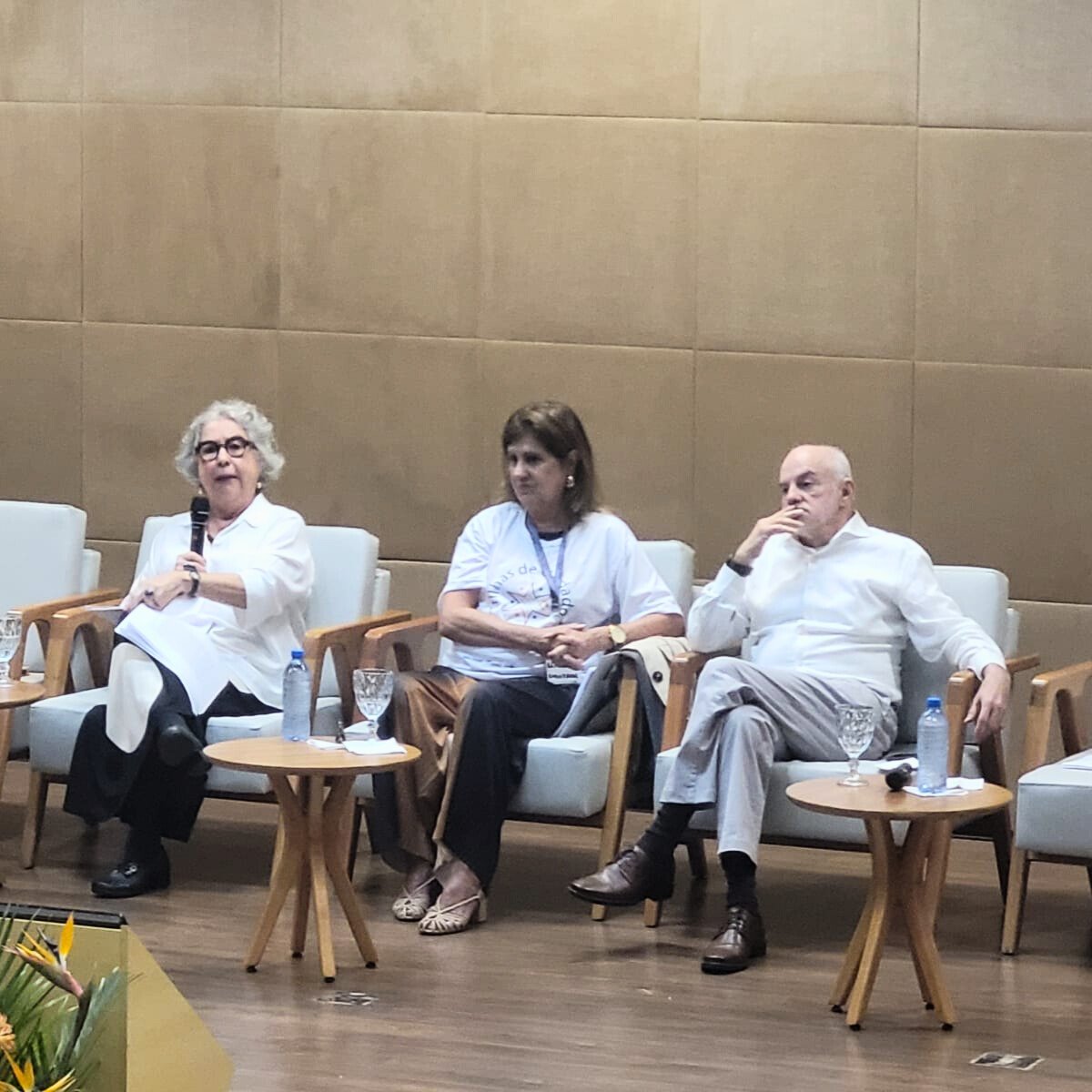
Sonia Fleury, senior researcher at Fiocruz's Antônio Ivo de Carvalho Centre for Strategic Studies, presented a critical reading: “What is this world that produces the homeless population and, at the same time, their invisibility?”. The researcher used Foucault, Agamben and Mbembe to explain how society defines “abject” bodies and strips them of their citizenship status.
She called this process counter-rights: the practical negation of proclaimed rights.
For her, exclusion is more than inequality: it's the transformation of the other into an undesirable person who can be eliminated. However, there is resistance. Drawing inspiration from Brazilian authors, she proposed the metaphor of “trails”; paths invented by the street people themselves, such as the National Street People's Movement.
Fleury argued that there is a systematic production of poverty, fuelled by the financialisation of the economy, which takes resources away from care: “Brazil pays a trillion a year in interest on its debt; money that is lacking in health and care.” Fleury also questioned drug policy and structural violence.
For her, care is a political act and can be emancipatory when mediated by a pedagogical state, inspired by Paulo Freire; a state that listens before communicating and recognises the other as a subject of rights.
Rômulo Paes, researcher at Fiocruz Minas Gerais and president of the Brazilian Association
of Collective Health (Abrasco), addressed the complexity of the phenomenon and the challenges of public policies. “Cities have been producing homeless people for as long as they have existed,” he recalled. In his assessment, demographic, family and economic factors such as hyper-capitalism, digital overexposure and loneliness redefine vulnerabilities.
Paes highlighted a paradox: despite the reduction in extreme poverty, the number of people on the streets, including the elderly and children, continues to grow. “Why, even with a strengthened Bolsa Família and SUAS, is the number increasing?” he asked.
He advocated seeking to understand users“ subjectivity and choices (from self-care to housing) and investing in participatory research. He proposed a distributed responsibility among all public services, including CRAS, CREAS, schools and health centres. ”Many people don't know they have rights, and many civil servants don't recognise them as citizens," he warned.
He emphasised the importance of reliable data (such as the Single Registry and censuses) and more efficient administrative records, capable of guiding continuous and monitorable policies. “The last thing public policy can be is hopeless,” he concluded.
The panel ended without any uncomplicated answers, but with a clear consensus: caring means redistributing power. Between the streets and the offices, one certainty emerged: without listening, there is no citizenship; without citizenship, there is no care; and without care, there is no democracy.
Read more
Coverage of 22 October 2025
Coverage of 23 October 2025
Photo caption: From left to right: Sonia Fleury, Elyne Engstrom and Rômulo Paes. Diana Alarcón introduced herself virtually.