

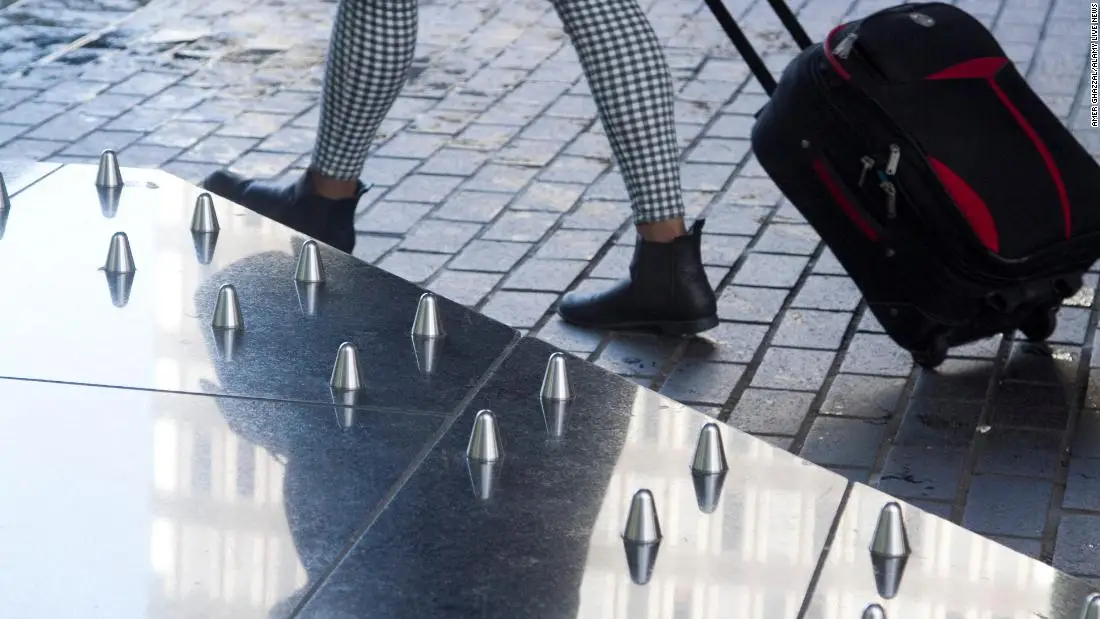
“Hostile architecture”, also known as defensive urban design, refers to the use of building components to guide or repress certain behaviours in public areas. Rather than simply providing comfortable benches, pavements or squares, this type of design includes structures that make it uncomfortable or even unfeasible to sit, lie down or simply stay there. The practice mainly targets those who need public space the most: homeless people, young people, the elderly and people with disabilities.
In several cities in Brazil, we see seats with bars in the middle (preventing lying down), metal supports on steps and stones under bridges and viaducts. The official reason is “to prevent acts of vandalism” or “to avoid improper behaviour”. In reality, however, these measures direct homeless people to less visible corners and pavements, creating a city of façades and exclusion. This architecture intensifies socio-spatial segregation and complicates the right to mobility for those without a home.
Father Julio Lancellotti's demonstration
In 2021, under the Dom Luciano Mendes de Almeida viaduct on the east side of São Paulo, the city administration placed sharp stones to prevent homeless people from settling there. Father Julio Lancellotti, head of the Street People Pastoral, responded with a sledgehammer: demolished the public barrier as a symbolic gesture of denunciation. The image went viral and emphasised that the city is not impartial - it can exclude or welcome, depending on the project.
Motivated by actions such as Father Lancellotti's, in 2021 Senator Fabiano Contarato proposed Bill 488/2021, which amended the City Statute (Law 10.257/2001) to ban aggressive architectural methods in public places. The Chamber of Deputies approved it, and the Law 14.489/2022, The law, officially known as the Father Julio Lancellotti Law, was enacted on 21 December 2022, vetoed by Jair Bolsonaro and later restored by the National Congress.
The legislation is unequivocal: “The use of harmful materials, structures, equipment and construction methods in public use areas is prohibited”. Devices such as pins, obstructed benches and purposely uneven floors are forbidden. The document also states that the city must provide comfort, shelter and quality of life for everyone, particularly the most vulnerable groups, such as children, the elderly and homeless people.
In December 2023, the federal government issued a decree regulating this law, defining guidelines for federal entities and federally funded projects. The decree reiterates the ban on “aggressive construction methods” and instructs municipal administrators to include accessibility provisions and “receptive environments” in their urban planning projects. The decree also establishes the formation of urban planning teams to detect and eradicate harmful practices.
Effect on individuals' lives
By banning hostile architecture, the legislation establishes minimum standards of comfort: barrier-free seating, level pavements and rest areas. For those living on the streets, this means being able to sleep in less danger - in marquees, squares and even bus stops. For passengers, it ensures accessible seating. And for everyone, it's important to remember that the city belongs to everyone, not just to investors or tourists.
Although the legislation is federal, the creation of urban projects is the responsibility of the municipalities. It's the responsibility of each city to include a ban on aggressive techniques in their building codes. Revisions to street furniture have already been announced in some pilot cities, such as Belém and Recife. In the city of São Paulo, specialists from the Municipal Secretariat of Subprefectures supervise complaints and remove banned pins and structures.
Difficulties in monitoring
Implementation is not always instantaneous. Often, independent traders place pins on the steps of historic buildings or under marquees. The law requires urban oversight bodies, such as municipal guards, to act on a voluntary basis or to act on complaints. However, many municipalities lack the teams and financial resources to inspect every street corner.
On the other hand, inclusive urban design initiatives stand out. In Curitiba, benches with cosy backrests and sinuous shapes are being experimented with. In Rio de Janeiro, the IAB-RJ organised a competition to create prototypes of public furniture designed for all bodies, without distinction of any kind. These actions demonstrate that it is possible to combine safety with comfort.
Article 6 of the Federal Constitution guarantees the right to housing and social well-being. If public spaces are to be accessible to all, architects and urban planners have an ethical obligation to create cities that adapt to the bodies and habits of each individual. The Father Julio Lancellotti Law emphasises that the urban environment is not impartial - it can promote coexistence or legitimise exclusion.
Residents, activists and scholars can contribute to law enforcement through complaints, proposals for improvements and participation in public hearings. Collaborative mapping apps have emerged to document areas of hostile architecture, enabling administrators to identify and resolve problem areas.
Where we're going
Banning aggressive construction methods is just the beginning. We need to change mentalities and recognise the city as a collective good. Cities can establish “receptive urbanism” labels for public and private developments. Urban education initiatives in schools and Social Assistance Reference Centres contribute to training citizens who are aware of their rights and responsibilities.
The Father Julio Lancellotti Law is a watershed in the fight for a receptive and welcoming public space. By preventing practices of architectural exclusion, it paves the way for more democratic cities where everyone, regardless of whether they have a home or not, can exercise their citizenship. It's time to remove the pins, level the pavements and build benches of all kinds. After all, the city belongs to those who inhabit it and aspire to it.