

My history with rock began in 1973, when I was 11 years old. Rock music has been a passion ever since. My first rock record was one by Alice Cooper, with the suggestive title Muscle of Lovenot recommended for minors. It wasn't the best, I realise today, but it was the start of a long journey.
At that time, I also met the legendary FM radio station Eldopop (98.1MHz). Something unprecedented for those times; it was a rock radio station without announcers, with 19 hours a day of pure rock and few commercial breaks.
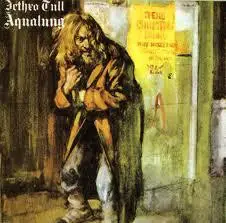
Its programme featured Aqualungby the English band Jethro Tull, certainly one of the best musical descriptions of the perceptions that "good people" have of the homeless.
Aqualung (original lyrics here) is the title track from Jethro Tull's fourth studio album. Released on 19 March 1971, it is considered one of the most important milestones of the progressive rock British.
Ian Anderson , the band's leader, composed the lyrics in partnership with Jennie Franks, his wife, who at the time was photographing homeless people for a school assignment in London.
Anderson has already stated that Aqualung is less about the people who live on the street and more about society's reaction to the homeless: feelings of fear, discomfort, compassion and judgement.
The song's title refers to the characteristic sound of divers' breathing, and is also the trade mark for scuba diving equipment. And here it works as a metaphor for its character's breathing difficulties, affected by respiratory illnesses that are characteristic of homeless people. There have already been those who have used the motto of Aqualung to write medical article on diseases common to these peoplesuch as pulmonary oedema and mental disorders.
The lyrics of Aqualung
Sitting on a park bench
Eyeing little girls with bad intent
Snot running down his nose
Greasy fingers smearing shabby clothes
Hey, Aqualung

Drying in the cold sun
Watching as the frilly panties run
Hey, Aqualung


Feeling like a dead duck
Spitting out pieces of his broken luck
Wow, Aqualung

Sun streaking cold
An old man wandering lonely
Taking time the only way he knows
Leg hurting bad
As he bends to pick a dog-end
He goes down to the bog and warms his feet


Feeling alone
The army's up the road
Salvation a la mode and a cup of tea
Aqualung, my friend
Don't start away uneasy
You poor old sod, you see, it's only me


Do you still remember
December's foggy freeze?
When the ice that
Clings on to your beard
Was screaming agony
And you snatch your rattling last breaths
With deep-sea-diver sounds
And the flowers bloom like
Madness in the spring


Sun streaking cold
An old man wandering lonely
Taking time the only way he knows
Leg hurting bad
As he bends to pick a dog-end
He goes down to the bog and warms his feet


Feeling alone
The army's up the road
Salvation a la mode and a cup of tea
Aqualung, my friend
Don't start away uneasy
You poor old sod, you see, it's only me
oh ho ho ho ohoo


Dee dee dee dee
Dee dee dee dee dee
Dee dee dee dee dee
Dee dee

Aqualung, my friend
Don't start away uneasy
You poor old sod, you see, it's only me
Sitting on a park bench
Looking at little girls with bad intentions
Runny nose
Greasy fingers staining tattered clothes
Hey, Aqualung
Drying in the cold sun
Watching as lacy knickers flow
Hey, Aqualung

Feeling like a dead duck
Spit out pieces of your broken luck
Wow, Aqualung

Icy rays of sunshine
An old man wandering alone
Spending time the only way you know how
Leg hurts a lot
As he bends down to pick up a cigarette butt
He goes down to the marsh and warms his feet

Feeling alone
The army is just ahead
Salvation in style and a cup of tea
Aqualung, my friend
Don't be frightened, so restless
You, poor old bastard, see? It's just me

Do you still remember
The freezing December fog?
When the ice that
It stuck to his beard
She screamed in agony
And you drew your last panting breaths
With deep-sea diver sounds
And the flowers bloomed like
Spring madness

Icy rays of sunshine
An old man wandering alone
Spending time the only way you know how
Leg hurts a lot
As he bends down to pick up a cigarette butt
He goes down to the marsh and warms his feet


Feeling alone
The army is just ahead
Salvation à la mode and a cup of tea
Aqualung, my friend
Don't be frightened, so restless
You, poor old bastard, see? It's just me
Oh ho ho ho ohoo

Dee dee dee dee
Dee dee dee dee dee
Dee dee dee dee dee
Dee dee

Aqualung, my friend
Don't be frightened, so restless
You, poor old bastard, see? It's just me
Lyrics and theme
The first part of the song tells of an old, sick, lonely and naturally marginalised man who observes the world around him, where children are playing, in a poetic contrast between innocence and decadence.
In the second part, the narrator approaches Aqualung with an empathetic gaze, calling him "friend" and thus recognising his humanity, something that connects him to us, but which many people like to ignore.
The third and final part seems to evoke the death of Aqualungwith allusions to the "last breath" and the fact that life goes on even after your departure.
Religion, institutional hypocrisy, social inequality and alienation are recurring themes throughout the album Aqualung.
The album sold more than seven million copies worldwide and among the best albums of all time, having influenced Iron Maiden, Pearl Jam and Nick Caveand was a turning point in the band's career. Its musical complexity, alternating between heavy guitar riffs and delicate, almost baroque acoustic passages, has been emphasised by analysts.
Re-released several times, the album was reissued with a full live version recorded for XM radio in 2004The proceeds went to institutions working with homeless people.
In 2021, a music video was released to commemorate the 50th anniversary of the song, written by Sam Chegini, which you can see above in this post.
More than half a century has passed since Ian Anderson blew his flute to give voice to the old man on the park bench. And even today, Aqualung breathes - with difficulty, it's true - between the gaps in the city, between our averted gazes, between the cigarette butts forgotten on the ground. Perhaps it's time, like the narrator of the song, to approach it without fear. And say it with humanity: "Aqualung, my friend... you see? It's just me."
the theme of the "bumps" - clochards, in French terminology - ignited a certain post-hippie imaginary of the 1970s, of which some bands were a part (Tull, Genesis (selling England by the Pound)), especially in the English world, which was moving towards the Thatcherist neoliberalism that ended up generating the punk counter-movement. I'd say that it was only young people who had the sensitivity to perceive the worldwide growth of the most atrocious liberalism that would make tragic stories in Chile and Argentina. And there, too, (and, if we look, here too) the music of the time was concerned with this issue. Perhaps that's part of the enduring nature of this hit from the second half of the twentieth century.