


Here we are, inaugurating the Voices from the Street of our project. Our first guest is Kleidson Oliveira Beserra, 47, married, father of three, from Brasilia and proud owner of a wine-coloured Volkswagen Santana. We met during the International Seminar on the Homeless, The event took place on 22 and 23 October at Fiocruz Brasília. Kleidson was accompanying his wife, Brenda, another leader in the PopRua movement, and looking after Mateus, their one-year-old and 10-month-old son, while his wife took part in tables at the event or did her homework. networking. Yes, the homeless population makes its networking in the circles I frequent.
But I don't want to go on too long. Voices from the Street wants to give a voice to the unheard. And the result is surprising and revolutionary. I've found myself falling in love with this subject, especially as a journalist with 43 years' experience, in search of something that motivates, in this very uninteresting historical period in which we live.
Actually, I'm going on at length here because this is the debut interview of Voices from the Street, I need to tell you about what drives me in this section.
And a few things have occurred to me. For example, that listening is not about giving voice, but being willing to be transformed. Each speech by these voices from the street that we are now collecting dismantles stereotypes, tears apart the logic of haste and challenges the “objectivity” of the newsroom.
The street is where all the agendas are condensed - health, housing, security, the economy, drug policy, education, faith, racism, gender, climate. The street is a mirror of a nation's bankruptcy and hope.
The circumstances in which the interviews take place also vary. In Kleidson's case, our conversation began at the event and lasted a few WhatsApp sessions for further questions. But there are situations in which you interview a homeless person today and you don't know if they'll be in the same place tomorrow. They may be on the run from the police, who invariably attack them, or they may have been taken to CAPS in search of treatment. The conversation takes place on the pavement, in the shelter, in the square, on the bus, in the CAPS. Sometimes the interviewee disappears and reappears months later with a new revelation. These reunions teach you patience, humility and humour, virtues that hurried journalism has forgotten.
There are agreements to be made. The interviewee may not want his or her name revealed, or fear reprisals from anyone. In Kleidson's case, an informed consent agreement was signed between us for the use of his image, his name and his stories.
As far as possible, I decided to intervene as little as possible in the text of the interview. Here you will read Kleidson expressing himself in his own way. We have rescued his voice, his testimony, and in this context any interference from the reporter is noise.
Covering homeless people means practising restorative journalism - the kind of coverage that doesn't just report the news, but tries to restore humanity.
I have the privilege and responsibility of becoming a bridge between worlds that no longer see each other.
And in the process, I discovered that the pleasure of the trade doesn't come from the scoop, but from meeting remarkable people. Remarkable people like Kleidson and many others who will pass through here.
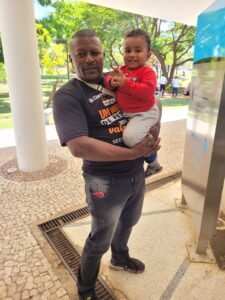
With you, Kleidson (click on this link)