

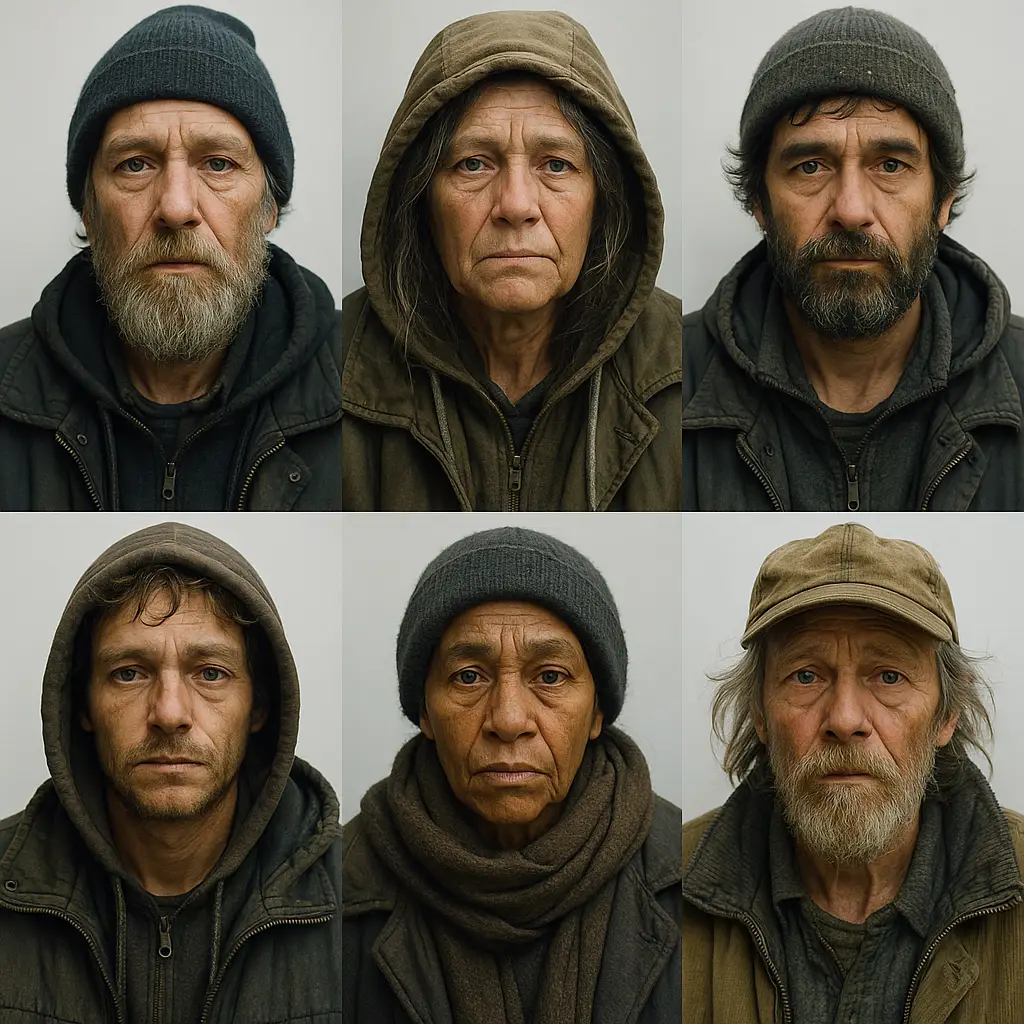
Even though hunger is falling and incomes are rising, Brazil is multiplying invisible addresses. What the explosion of the homeless population says about the collective failure to guarantee the right to housing and dignity.
Report published in O Globo reveals that although Brazil has left the hunger map and reached the lowest level of food insecurity in its history, according to the IBGE, the streets are still a destination for thousands.
The situation is paradoxical when you add to these figures the information that Bolsa Família has expanded its reach and unemployment has fallen. Despite all these positive indicators, 350,000 Brazilians still live on the streets, according to CadÚnico, a figure that is double that of 2019. These figures are probably out of date, as they don't match up with municipal data. The IBGE promises a census of this population in 2028.
Marco Natalino, a researcher at IPEA, provides a clue to explain this apparent paradox. According to him, income has improved, but social ties are still lacking, and the social assistance system has not advanced at the same speed.
In addition, the Covid-19 pandemic has dissolved many family ties, with the death of loved ones, especially among the LGBTQIA+ population, which has driven many people onto the streets.
Thus, the absence of the state and the collapse of family relationships, replaced by informal support networks that can't cope with the demand, could explain the phenomenon.
Take the case of the POP Centres and CREAS. The country has less than 240 centres for 5,000 municipalities. Laura Muller Machado, an economist at Insper, sums up another paradox well: “We have an emergency policy, not a trajectory policy”.
In the absence of housing, mental health and income, the street becomes the last resort for survival.
It's true that the Supreme Court intervened in this state of affairs in 2023 with ADPF 976, curbing forced removals and hostile architecture, which inspired the National Visible Streets Plan, with a budget of one billion reais/year. But without respect for the inter-federative pact, and with the lack of commitment from states and municipalities to their legal obligations, all this becomes a dead letter.
What needs to change - and how
- Permanent funding: linking the social assistance budget to the constitutional health floor.
- Integrated housing: expand the Housing First (Housing First) and include popular housing co-operatives.
- Income and work: stimulate the solidarity economy and microcredit, with priority given to people who have left the streets.
- Simplified annual census: participatory survey with universities and social movements.
- Live governance: guaranteed seats for homeless people on local councils.
Source: Out of reach: homeless population grows even as hunger and unemployment fall / The Globe
Image generated by Artificial Intelligence